Send money to India from the USA
Most people compare the wrong number when they send money to India. The rate on the screen looks competitive, the fee looks small, and then the recipient's bank statement shows a different amount. The gap is usually the rate margin plus a receiving charge. This guide starts with the live USD to INR mid-market rate, then walks through the details that decide what actually lands in an Indian bank account.
Reviewed 5 November 2026. Rates update automatically.

Updated · Latest mid-market rate
Mid-market rate for guidance only. Banks and transfer providers add a margin and may charge a fee. This site does not handle, hold or transfer money.
Some provider links are affiliate links. We may earn a commission at no extra cost to you. This never changes the rate or fee you are offered.
Rate context
Over the last 30 days of published data, 1 USD moved between 93.6900 and 95.2700 INR, with an average of 94.7267. The change over the period was -1.54%.
| You send | Mid-market value |
|---|---|
| 100 USD | 9,385.16 INR |
| 500 USD | 46,925.80 INR |
| 1,000 USD | 93,851.60 INR |
| 2,500 USD | 234,629.01 INR |
| 5,000 USD | 469,258.02 INR |
The rupee is managed, not fixed. The Reserve Bank of India lets the market set the level most of the time, but it has a long record of stepping in when a move becomes disorderly. India imports most of its crude oil, so a rise in energy prices can weaken the current account and put pressure on the rupee. Remittances from Indians in the United States, the Gulf and Europe are a counterweight, as are software and business services exports. US interest rates matter too. When dollar yields rise, the dollar often strengthens against emerging market currencies, the rupee included.
Rates are indicative and can change. About our rates.
What the rupee rate is really telling you
The number at the top of this page is a mid-market reference. It is the midpoint between wholesale buyers and sellers, not the price a bank in Mumbai will give you for a retail transfer.
A bank and a transfer app can both quote USD/INR, but they are not quoting the same product. One quote may include a margin, a fixed fee and a settlement promise. The other may look cheaper until you see the amount that arrives. Treat the mid-market rate as a ruler, not as an offer.

The four numbers that decide the payout
Ask for the exchange rate, the transfer fee, any receiving fee and the expected arrival date in the same quote. Then do one simple calculation: divide the rupees that arrive by the dollars you send. That gives you the effective rate. It is the only number that lets you compare providers fairly.
A small difference in the margin adds up. On a 1,000 USD transfer, a margin that is one percentage point wider costs about 10 USD before any fixed fee. That is why a provider with a visible fee and a tight rate can beat one that advertises no fee and a wide rate.
- The effective rate after every charge, not the advertised rate.
- Whether the recipient bank deducts a receiving fee.
- Whether the quote is locked or converted later.
- The arrival date, including weekends and Indian bank holidays.

Bank account, UPI or wallet
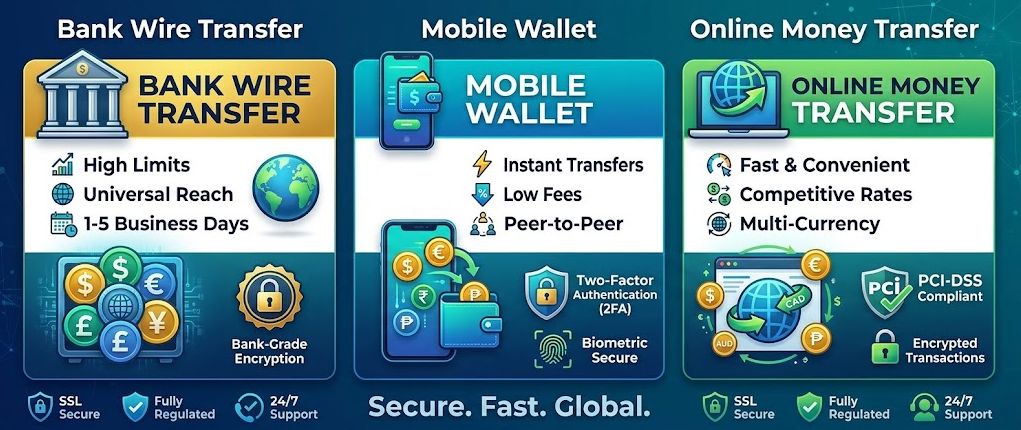
Bank deposit is still the standard route. The recipient needs an account in their own name, the correct account number and the IFSC code for the branch. If the name on the transfer does not match the name on the account, the payment can go into review even when every other detail is correct.
Some providers also pay to UPI or a wallet. Availability depends on the sender country, the provider and the amount. If the recipient gives you a UPI ID, do not assume the provider supports UPI. Ask first, and check that the UPI name matches the recipient. Cash pickup is possible on some routes but is not the norm for this corridor.
The details that cause delays
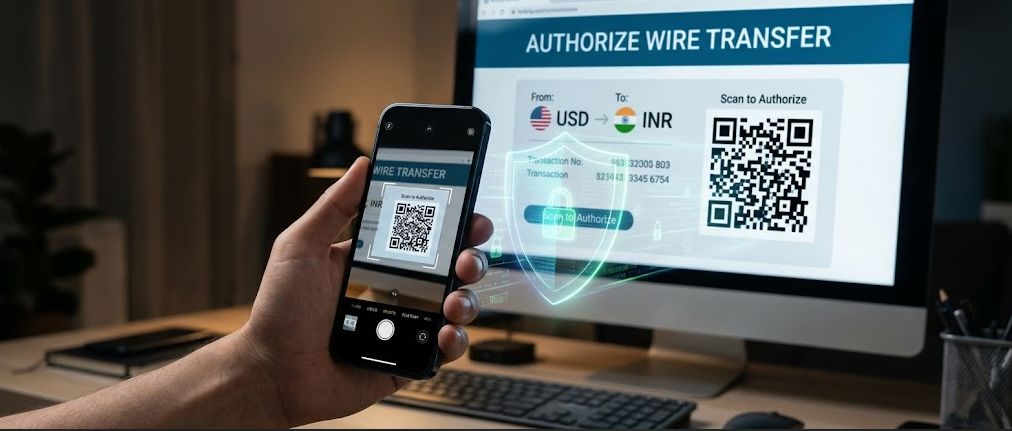
The usual culprits are a misspelled name, an IFSC code for the wrong branch, an account that cannot receive international credits and a missing purpose code. Larger transfers can also trigger questions about the source of funds.
Indian banks may ask the recipient for identification or supporting documents on larger credits. That is normal. The problem is when the sender has already paid and nobody warned the recipient. Tell them what to expect before the money leaves the United States.
When the rate can move
A provider that locks the rate when you pay gives you certainty. A provider that converts later passes on whatever rate is available at settlement. Neither model is automatically better, but you should know which one you are using before you confirm.
Timing matters around major oil moves, Reserve Bank announcements and the US data calendar. A transfer started on Friday evening can sit over the weekend and settle at the next available rate. If the amount is large, ask how the provider handles weekend quotes.

A simple test before a large transfer
Send a small amount first if the recipient is new or the route is unfamiliar. Check the amount that arrives, the receiving bank's charge and how long it took. Then send the larger amount with the same recipient details. The test costs a little, but it is cheaper than fixing a failed transfer.
Keep the quote, the receipt and the provider's reference number. If the amount is short or the payment is delayed, those details are what the support team will ask for.
What to check with each provider
Only providers that support both currencies in this corridor are listed. We do not publish provider fees here because they change by country, payment method and amount. Open a live quote and compare the amount that actually arrives. Provider order is not a ranking of cost.
| Provider | What to check | Link |
|---|---|---|
| Revolut | Check your plan limits, the corridor fee and whether the recipient can be paid in the local currency. | Open |
| Wise | Look at the fee and the rate margin separately, then confirm the payout method available in the destination country. | Open |
| OFX | Check the minimum transfer size, how you request a quote and whether the deal is handled online or by phone. | Open |
| WorldRemit | Confirm whether the destination supports bank deposit, mobile wallet or cash pickup, and who pays any receiving fee. | Open |
| Xe | Check the rate margin, the settlement time and whether the recipient needs a bank account or can collect cash. | Open |
| Remitly | Compare the standard rate and fee, not only a first transfer promotion, and confirm the expected arrival date. | Open |
Some links are affiliate links. If you open an account or start a transfer, we may earn a commission at no extra cost to you. How this site is funded.
How to send money to India
- Start with the live mid-market rate and compare the total amount your recipient would receive.
- Confirm the payout method and the recipient account, wallet or pickup details.
- Complete the provider identity and source of funds checks before you fund the transfer.
- Check the quote expiry and whether the provider locks the rate when you pay.
- Keep the receipt and confirm the amount that arrives in India.
Timing and document requirements vary by provider and payout method. Confirm them on the provider site before you send.
Frequently asked questions
How much is 1 USD in Indian rupees today?
At the latest update, 1 USD is worth 93.8516 INR at the mid-market rate. That means 100 USD is about 9,385.16 INR and 1,000 USD is about 93,851.60 INR before provider fees and margins.
Why does my recipient get less than the calculator shows?
The calculator uses a mid-market rate. Providers add a margin and may charge a transfer fee. The receiving bank can also deduct a fee. Compare the amount that actually arrives, not the headline rate.
Is UPI faster than a bank deposit?
It can be, but it depends on the provider and the recipient wallet. Confirm that UPI payout is supported before you send. A bank deposit is usually the safer default for a first transfer.
Do Indian banks charge to receive money?
Some do, and the charge can be deducted from the amount that arrives. Ask the recipient to check with their bank before you compare providers.
Should I send dollars or rupees?
The provider converts your dollars into rupees for the payout. The rate and fee it uses determine how many rupees arrive. You do not need to hold rupees in advance.
Useful links
CurrenciesLive is an informational tool. It does not process, hold or transfer funds. Rates are indicative mid-market values, not quotes from any provider.