Send money to Pakistan from the UK
GBP to PKR is not a direct market. Sterling is converted through the dollar before it reaches the rupee, and that two step path is where costs can hide. Add the difference between Pakistan's interbank and open market rates, and the same transfer can produce noticeably different rupee amounts. This guide explains what to check before you send.
Reviewed 5 November 2026. Rates update automatically.
Updated · Latest mid-market rate
Mid-market rate for guidance only. Banks and transfer providers add a margin and may charge a fee. This site does not handle, hold or transfer money.
Some provider links are affiliate links. We may earn a commission at no extra cost to you. This never changes the rate or fee you are offered.
Rate context
| You send | Mid-market value |
|---|---|
| 100 GBP | 36,805.39 PKR |
| 250 GBP | 92,013.47 PKR |
| 500 GBP | 184,026.94 PKR |
| 1,000 GBP | 368,053.87 PKR |
| 2,500 GBP | 920,134.68 PKR |
Pakistan runs a managed float. The State Bank of Pakistan publishes a daily reference rate and has intervened repeatedly when the rupee comes under pressure. Remittances from the United Kingdom, Saudi Arabia and the UAE are a major source of dollars. Textile exports and IMF programme reviews shape the rest. When dollars are scarce, the open market rate can drift away from the interbank rate, and banks may ration foreign exchange.
Rates are indicative and can change. About our rates.
A cross rate, not a direct market
There is no deep direct sterling market in Pakistan. GBP/PKR is built from GBP/USD and USD/PKR, so the rate you see is a cross rate. That matters because each leg carries its own spread.
At weekends and on bank holidays, one leg may be stale while the other is moving. The result can be a wider quote than you would expect from a major pair. If the amount is large, ask whether the provider is quoting sterling directly or converting through the dollar.

The interbank and open market gap
The interbank rate is used between banks. The open market rate is quoted by exchange companies and retailers. When dollar supply is tight, the two can diverge, sometimes by a meaningful amount.
Ask which rate the provider uses and whether the quote is based on the interbank market or an open market reference. Then compare the rupees that arrive. A provider quoting a better headline rate but charging a larger fee can still leave your recipient with less.
- The rate source: interbank, open market or a provider reference.
- The fee and any receiving bank charge.
- Whether the quote is locked and for how long.
- The expected arrival time in Pakistan.
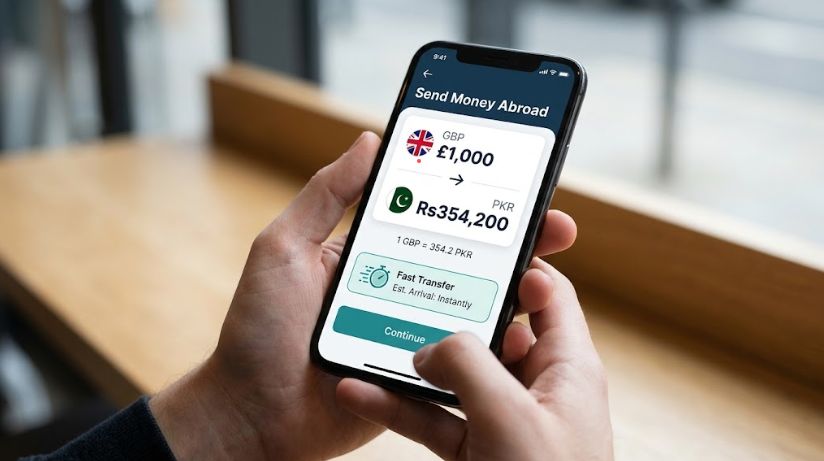
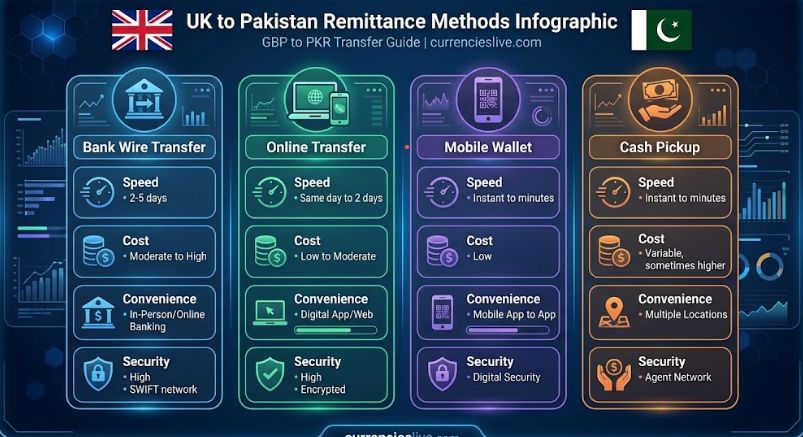
Bank, wallet or cash pickup
Bank deposit is widely used. The recipient needs an account in their own name and a CNIC, the Computerised National Identity Card, for identity checks. The name on the transfer should match the bank record exactly.
Mobile wallets such as JazzCash and Easypaisa are common, but not every international provider supports them. Cash pickup may be available in larger cities. If the recipient does not have a bank account, confirm the pickup location and the identification they need before you send.
What the recipient needs
A bank recipient needs the account number, the bank name and a CNIC. A wallet recipient needs an active wallet registered in their own name. A cash pickup recipient needs photo identification and the reference number from the transfer.
Do not rely on a saved beneficiary from an old transfer without checking it. Bank details change, wallets get replaced and names are entered differently. A two minute call with the recipient can save a week of support emails.
Timing around weekends and bank holidays
Many UK to Pakistan transfers arrive the same day or the next business day. Friday afternoon is the awkward window. The UK side may process the payment, but the Pakistani bank may not settle it until the next working day.
Public holidays in either country can add time. If the transfer is for a deadline, send it earlier than you think you need to. Ask the provider for an arrival estimate that accounts for the destination bank, not just the send button.
The mistake that costs the most
The most expensive mistake is comparing the fee without comparing the rate. The second is sending to a bank account that cannot receive international payments. The third is assuming that the advertised rate is the rate you will get.
Test the route with a small amount if you are sending to a new recipient. Keep the quote and the receipt. Once the route works, a larger transfer is less of a gamble.
- Do not compare the fee on its own.
- Check the recipient name against the bank or wallet record.
- Ask whether the quote uses the interbank or open market rate.
- Avoid starting a time sensitive transfer on a Friday afternoon.
What to check with each provider
Only providers that support both currencies in this corridor are listed. We do not publish provider fees here because they change by country, payment method and amount. Open a live quote and compare the amount that actually arrives. Provider order is not a ranking of cost.
| Provider | What to check | Link |
|---|---|---|
| Wise | Look at the fee and the rate margin separately, then confirm the payout method available in the destination country. | Open |
| WorldRemit | Confirm whether the destination supports bank deposit, mobile wallet or cash pickup, and who pays any receiving fee. | Open |
| Xe | Check the rate margin, the settlement time and whether the recipient needs a bank account or can collect cash. | Open |
| Remitly | Compare the standard rate and fee, not only a first transfer promotion, and confirm the expected arrival date. | Open |
Some links are affiliate links. If you open an account or start a transfer, we may earn a commission at no extra cost to you. How this site is funded.
How to send money to Pakistan
- Start with the live mid-market rate and compare the total amount your recipient would receive.
- Confirm the payout method and the recipient account, wallet or pickup details.
- Complete the provider identity and source of funds checks before you fund the transfer.
- Check the quote expiry and whether the provider locks the rate when you pay.
- Keep the receipt and confirm the amount that arrives in Pakistan.
Timing and document requirements vary by provider and payout method. Confirm them on the provider site before you send.
Frequently asked questions
How much is 1 GBP in Pakistani rupees today?
At the latest update, 1 GBP is worth 368.05 PKR at the mid-market rate. That means 100 GBP is about 36,805.39 PKR and 1,000 GBP is about 368,053.87 PKR before provider fees and margins.
Why is the open market rate different from the interbank rate?
The interbank rate is used between banks, while the open market rate is quoted by exchange companies and retailers. When dollar supply is tight, the two can diverge. Ask your provider which rate applies to your transfer.
Can I send money to a mobile wallet in Pakistan?
Some providers support wallets such as JazzCash and Easypaisa. Availability depends on the provider and the amount. Confirm that the wallet is active and registered in the recipient name before sending.
What identification does my recipient need?
A recipient usually needs a CNIC and a bank account or wallet in their own name. The provider may also ask for additional identity checks. Check the exact requirements before you fund the transfer.
How long does a UK to Pakistan transfer take?
Many transfers arrive the same day or the next business day, but bank hours, cut-off times and additional checks can add time. Ask the provider for an estimate for your specific payout method.
Useful links
CurrenciesLive is an informational tool. It does not process, hold or transfer funds. Rates are indicative mid-market values, not quotes from any provider.