Send money to the Philippines from the USA
Remittances are part of the Philippine economy, and providers compete hard for the corridor. That competition is good for senders, but it also makes the marketing noisy. A low fee, a promotional rate and a fast promise can all appear in the same ad. The way to compare is to look at the pesos that arrive after every charge.
Reviewed 5 November 2026. Rates update automatically.

Updated · Latest mid-market rate
Mid-market rate for guidance only. Banks and transfer providers add a margin and may charge a fee. This site does not handle, hold or transfer money.
Some provider links are affiliate links. We may earn a commission at no extra cost to you. This never changes the rate or fee you are offered.
Rate context
Over the last 30 days of published data, 1 USD moved between 62.8790 and 63.9940 PHP, with an average of 63.3732. The change over the period was +0.59%.
| You send | Mid-market value |
|---|---|
| 100 USD | 6,330.54 PHP |
| 500 USD | 31,652.70 PHP |
| 1,000 USD | 63,305.39 PHP |
| 2,500 USD | 158,263.48 PHP |
| 5,000 USD | 316,526.95 PHP |
The peso floats, though Bangko Sentral ng Pilipinas intervenes when moves become disorderly. Remittances from overseas Filipino workers are a steady source of dollars, alongside business process outsourcing revenue. Imports and the policy rate also matter. The peso is sensitive to US interest rates because a stronger dollar can pull emerging market currencies lower.
Rates are indicative and can change. About our rates.
How remittances shape the peso
Remittances are a reliable flow of dollars into the Philippines, but they are not the only driver. The peso also reacts to trade, foreign investment, the central bank's policy rate and the direction of the dollar.
Flows often rise before major holidays and school fees. That can make the corridor busier, but it does not guarantee a better rate. Compare the quote you are offered with the mid-market value on the day, not with a rate you remember from last month.

The number to compare
Ask for the pesos that arrive after the exchange rate, the transfer fee and any receiving charge. That final number is the only fair basis for comparison.
A one percentage point difference in the margin on a 1,000 USD transfer is about 10 USD before any fixed fee. If one provider charges a visible fee and another hides the cost in the rate, the final peso amount will show you which is cheaper.
- The effective rate after all charges.
- The payout method: bank, wallet or cash pickup.
- The quote expiry and whether the rate is locked.
- The recipient name and account or wallet details required.
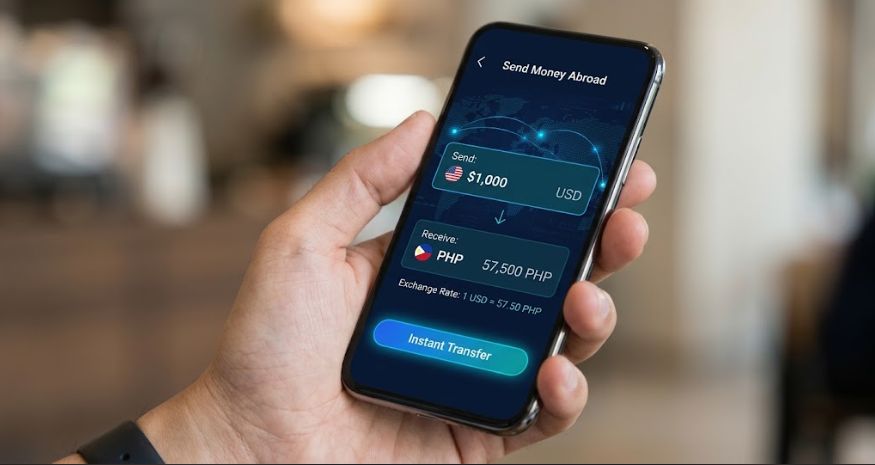
Bank, GCash, Maya or pickup
Bank deposit is common, and many providers also support mobile wallets such as GCash and Maya. Cash pickup remains available through some providers and partner networks. Each route has different identity and account requirements.
A wallet payout can be faster than a bank deposit, but it depends on the wallet being active and registered in the recipient's name. If you use a bank, confirm the account number and the recipient's full name. If you use cash pickup, confirm the pickup location and the identification required.

Recipient details that matter
The recipient's full name should match the bank account or wallet registration. For a bank deposit, you need the account number and the bank name. For a wallet, you need the wallet number and the registered name. For cash pickup, the recipient needs photo identification.
Check the details against a recent screenshot or statement. A saved beneficiary from an old transfer may point to a closed account or an outdated wallet. A quick confirmation prevents a long review.
When the money lands
Many transfers arrive within minutes or on the same business day. Bank deposits can take longer if the receiving bank has cut-off times or additional checks. Weekends and Philippine public holidays can also add a delay.
If the transfer is for a deadline, send it earlier than you think you need to. Ask the provider for an estimate for the specific payout method, not a general promise. A wallet payout and a bank deposit can have different cut-off times.

A checklist for a first transfer
Start with a small amount if the recipient is new or the provider is new to you. Confirm the pesos that arrive, the fee and the time taken. Then send the larger amount with the same details.
Keep the receipt and the provider reference. If something goes wrong, those details are what the support team needs. A first transfer is a test of the route, not just a payment.
- Confirm the recipient name and payout details.
- Check the final peso amount, not only the rate.
- Save the quote and the receipt.
- Test with a small amount before a large transfer.
What to check with each provider
Only providers that support both currencies in this corridor are listed. We do not publish provider fees here because they change by country, payment method and amount. Open a live quote and compare the amount that actually arrives. Provider order is not a ranking of cost.
| Provider | What to check | Link |
|---|---|---|
| Wise | Look at the fee and the rate margin separately, then confirm the payout method available in the destination country. | Open |
| OFX | Check the minimum transfer size, how you request a quote and whether the deal is handled online or by phone. | Open |
| WorldRemit | Confirm whether the destination supports bank deposit, mobile wallet or cash pickup, and who pays any receiving fee. | Open |
| Xe | Check the rate margin, the settlement time and whether the recipient needs a bank account or can collect cash. | Open |
| Remitly | Compare the standard rate and fee, not only a first transfer promotion, and confirm the expected arrival date. | Open |
Some links are affiliate links. If you open an account or start a transfer, we may earn a commission at no extra cost to you. How this site is funded.
How to send money to the Philippines
- Start with the live mid-market rate and compare the total amount your recipient would receive.
- Confirm the payout method and the recipient account, wallet or pickup details.
- Complete the provider identity and source of funds checks before you fund the transfer.
- Check the quote expiry and whether the provider locks the rate when you pay.
- Keep the receipt and confirm the amount that arrives in the Philippines.
Timing and document requirements vary by provider and payout method. Confirm them on the provider site before you send.
Frequently asked questions
How much is 1 USD in Philippine pesos today?
At the latest update, 1 USD is worth 63.3054 PHP at the mid-market rate. That means 100 USD is about 6,330.54 PHP and 1,000 USD is about 63,305.39 PHP before provider fees and margins.
Can I send money to GCash or Maya from the USA?
Some providers support GCash and Maya payouts, but availability depends on the provider and the amount. Confirm the wallet is active and registered in the recipient name before you send.
How long does a transfer from the USA to the Philippines take?
Many transfers arrive within minutes or on the same business day. Bank deposits, weekends and additional checks can add time. Ask the provider for an estimate for your chosen payout method.
What details does my recipient need?
For a bank deposit, the recipient needs a bank account in their own name and the correct account number. For a wallet, they need an active wallet registered in their name. Cash pickup requires valid identification.
Is the exchange rate guaranteed?
Only if the provider locks the rate at the time you pay. If the provider converts later, the final amount can change. Check the quote terms before you confirm the transfer.
Useful links
CurrenciesLive is an informational tool. It does not process, hold or transfer funds. Rates are indicative mid-market values, not quotes from any provider.