Currency in Morocco: the Moroccan dirham
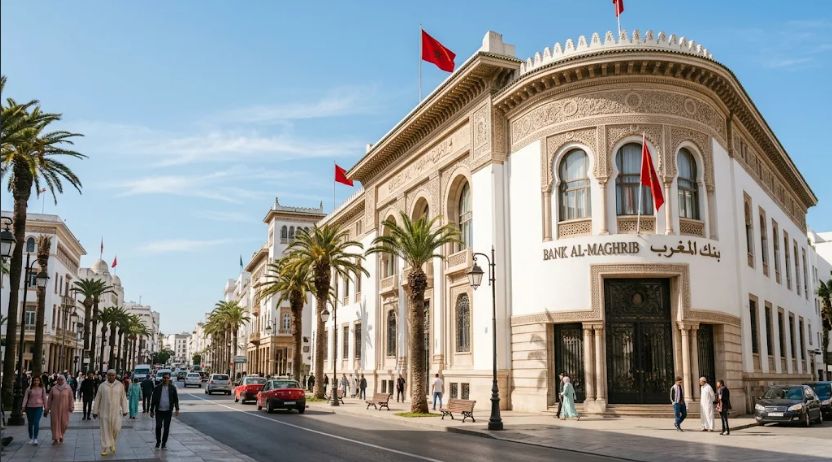
Morocco uses the Moroccan dirham, written MAD and often shown with the symbol DH. The currency is managed by Bank Al-Maghrib and is not fully convertible, so a little planning with cash and cards goes a long way. The notes are beautiful, the coin jar is heavy, and the receipt you get at the exchange counter is worth keeping.
Reviewed 5 November 2026. Rates update automatically.
Updated · Latest mid-market rate
Mid-market rate for guidance only. Banks and transfer providers add a margin and may charge a fee. This site does not handle, hold or transfer money.
Some provider links are affiliate links. We may earn a commission at no extra cost to you. This never changes the rate or fee you are offered.
Rate context
| You send | Mid-market value |
|---|---|
| 10 USD | 98.0215 MAD |
| 50 USD | 490.1075 MAD |
| 100 USD | 980.2150 MAD |
| 500 USD | 4,901.08 MAD |
| 1,000 USD | 9,802.15 MAD |
The dirham is managed inside a band against a basket in which the euro and the dollar dominate. That keeps it relatively stable, but it also means the rate you see at a hotel or airport counter can differ from the mid-market value. The dirham is not fully convertible, and travelers may need to keep exchange receipts to convert unused cash back.
Rates are indicative and can change. About our rates.
Moroccan Dirham key facts
The dirham, and why it is not quite a free market
The Moroccan dirham is divided into 100 centimes, though centime coins are less common in everyday use. Banknotes and coins are issued by Bank Al-Maghrib. The ISO code is MAD, and prices may be written as DH or Dhs.
The dirham is the legal currency. Some tourist businesses quote prices in euros, especially in Marrakech and other visitor areas. You can pay in euros at some places, but expect change in dirhams and a conversion that favors the business. The dirham is not fully convertible, so it is not a currency you can freely buy or sell outside Morocco.
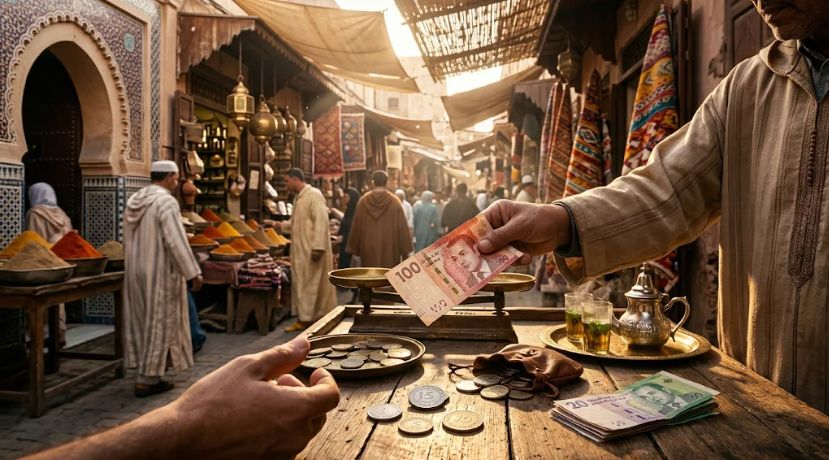
What cash looks like in a medina
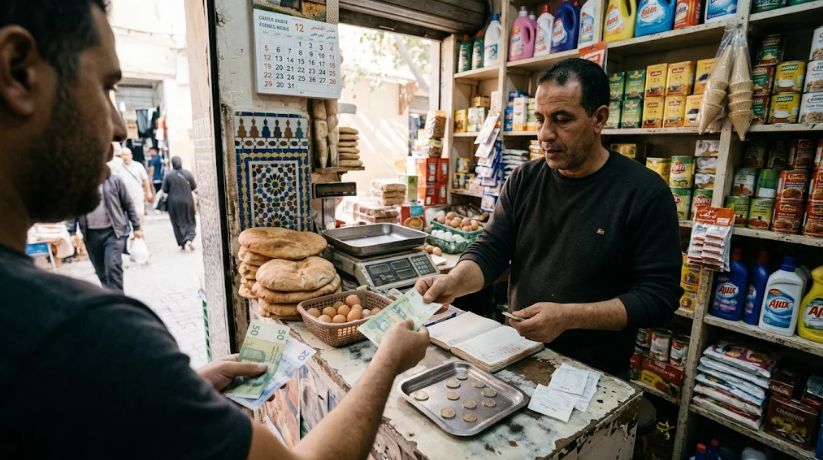
In the medina, cash is still king. A stall in the souk, a small cafe, a taxi, a porter or a rural shop may not have a card terminal. Carry a mix of 50 and 100 dirham notes and keep smaller notes for the first purchase of the day.
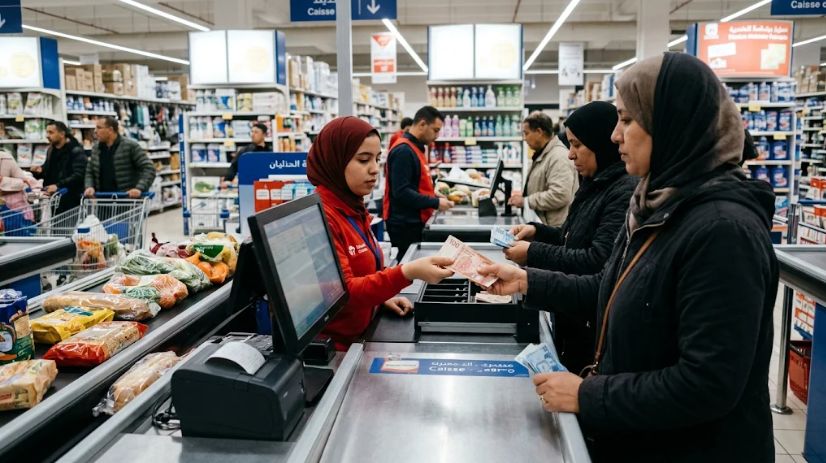
Do not assume that a large note will be welcome. Vendors often struggle to make change for 200 or 500 dirham notes. Break a large note at a bank or a supermarket before you head into a market.
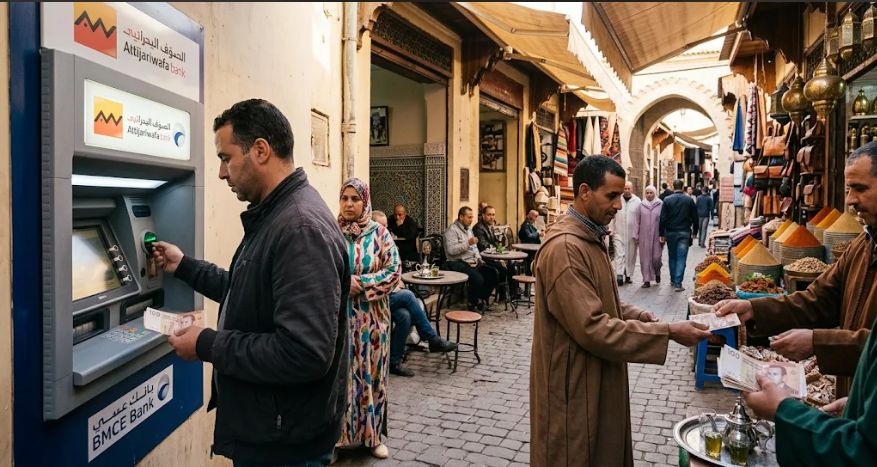
Cards, ATMs and the bank lobby rule
Cards are accepted in many hotels, larger restaurants and shops in the main cities. They are less reliable in small towns, souks and taxis. Carry a card as a backup, not as your only way to pay.
ATMs are widely available in cities and towns, but not every machine accepts foreign cards. Use a machine attached to a bank, check the operator fee and choose to be charged in dirhams if the machine offers a choice. The bank lobby rule is simple: an ATM inside a bank or a busy public place is a better bet than a machine on a quiet street.
Changing money without paying hotel rates
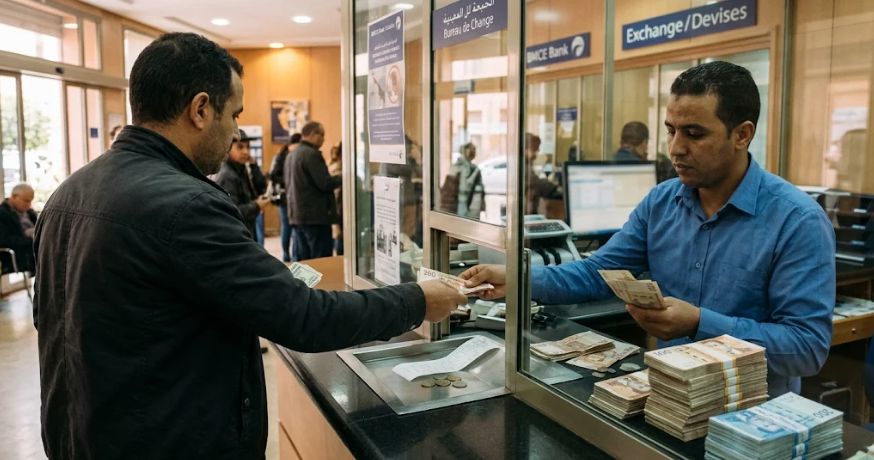
Use a bank or an authorized exchange office and compare the buy and sell rates before you hand over money. Airport and hotel counters are convenient, but convenience usually comes at a cost. Count your money before you leave the counter.
Keep the receipts from your exchange transactions. Because the dirham is not fully convertible, you may need proof of exchange if you want to convert unused cash back when you leave. Do not exchange money on the street, even if the rate looks better.
Tipping in a riad and a roadside cafe
Tipping is common in restaurants, cafes, hotels, riads and for guides and drivers. Check whether a service charge is already included, then round up or leave a small amount based on the service.
In a riad, a tip for the staff who carry bags and serve breakfast is appreciated. In a roadside cafe, rounding up the bill is usually enough. Keep a few small notes separate so you are not digging for change at the door.
The receipt rule
The receipt rule is the one piece of Moroccan money advice that visitors forget. If you change cash at a bank or exchange office, keep the slip. You may need it to prove where the dirhams came from if you convert leftover cash back at the airport.
The same applies to larger purchases or unusual transfers. A receipt is not just paperwork. It is your evidence if a counter asks questions later.
A realistic daily budget
Use the converter above to turn your home budget into dirhams, then add a margin for exchange costs and card fees. A card that charges a foreign transaction fee can add to every purchase, so check your bank's terms before you travel.
If you plan to visit markets, carry smaller notes and coins. Vendors may not have change for large notes, and a small purchase is easier when you can pay the exact amount.
Safety and scams
Use licensed exchange offices and bank ATMs. Count your change in markets, agree taxi fares before you get in, and keep cash in more than one place. If someone offers to exchange money on the street, decline and use an authorized counter instead.
Keep your passport and main cards separate from your everyday cash. If a card is lost, contact your bank immediately and use a backup card for the rest of the trip.
Frequently asked questions
What is the currency in Morocco?
The Moroccan dirham (MAD) is the legal currency. It is divided into 100 centimes and is issued by Bank Al-Maghrib.
Can I use euros in Morocco?
Some hotels and tourist businesses may accept euros, but the dirham is the legal currency. You should expect change in dirhams and a less favorable conversion if you pay in euros.
Are ATMs easy to find in Morocco?
ATMs are widely available in cities and towns, but not every machine accepts foreign cards. Use bank ATMs, check the operator fee and choose to be charged in dirhams.
Can I pay by card in Morocco?
Cards are accepted in many hotels, larger restaurants and shops, but cash is still useful for souks, small cafes, taxis and rural areas. Carry some cash as a backup.
Do I need to keep exchange receipts in Morocco?
It is a good idea. Because the dirham is not fully convertible, you may need proof of exchange if you want to convert unused cash back when you leave.
Useful links
Related guides
CurrenciesLive is an informational tool. It does not process, hold or transfer funds. Rates are indicative mid-market values, not quotes from any provider.