Send money to Morocco from France
France and Morocco have deep family and business ties, and euro to dirham transfers are routine. The dirham is managed, so the rate itself rarely makes headlines. The cost usually sits in the margin, the receiving bank's charges and the route the payment takes. This guide shows what to compare before sending.
Reviewed 5 November 2026. Rates update automatically.
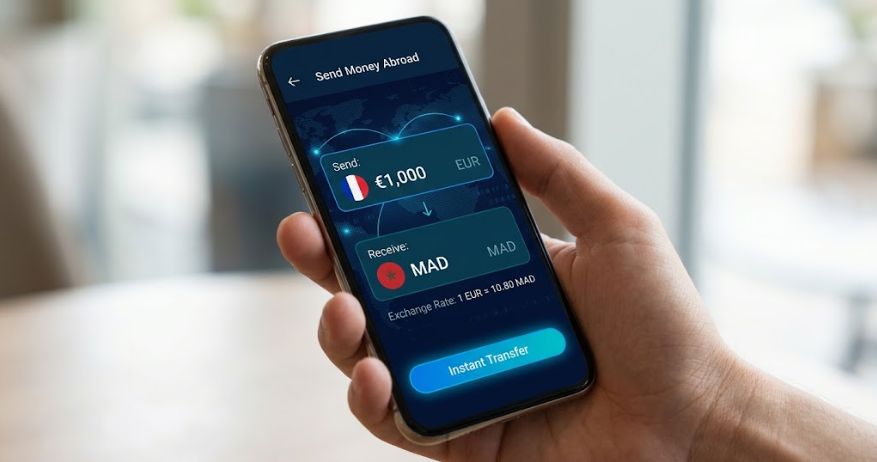
Updated · Latest mid-market rate
Mid-market rate for guidance only. Banks and transfer providers add a margin and may charge a fee. This site does not handle, hold or transfer money.
Some provider links are affiliate links. We may earn a commission at no extra cost to you. This never changes the rate or fee you are offered.
Rate context
| You send | Mid-market value |
|---|---|
| 100 EUR | 1,089.29 MAD |
| 250 EUR | 2,723.23 MAD |
| 500 EUR | 5,446.46 MAD |
| 1,000 EUR | 10,892.91 MAD |
| 2,500 EUR | 27,232.28 MAD |
Bank Al-Maghrib manages the dirham inside a band against a basket in which the euro and the dollar dominate. The euro carries the most weight because the European Union is Morocco's largest trading partner. Tourism, remittances, phosphate and automotive exports supply foreign currency. The dirham is not fully convertible, so the onshore rate is built from the central bank reference and local bank spreads.
Rates are indicative and can change. About our rates.
A managed currency with a European anchor
The dirham is not a free floating currency. Bank Al-Maghrib manages it against a basket, and the euro carries a large weight. That makes EUR/MAD relatively stable compared with pairs such as USD/TRY.
Stability does not mean zero cost. Banks and transfer providers still add a margin. Some route the payment through a European correspondent, which can introduce a second conversion. The mid-market rate is a starting point, not the rate your recipient will receive.

What the dirham rate does not show
A narrow daily range can make a pair look cheap to send. The real cost is in the margin and the fee. Ask for the dirhams that arrive after both charges, then compare that number across providers.
On a 1,000 EUR transfer, a margin that is one percentage point wider costs about 10 EUR. On a large transfer, a percentage margin can cost far more than a small fixed fee. That is why the cheapest option for a 100 EUR transfer may not be the cheapest for 2,500 EUR.
- The total MAD received after all charges.
- Whether the provider pays to a bank account or cash pickup point.
- The quote expiry and whether the rate is locked.
- Whether the payment is routed through a correspondent bank.
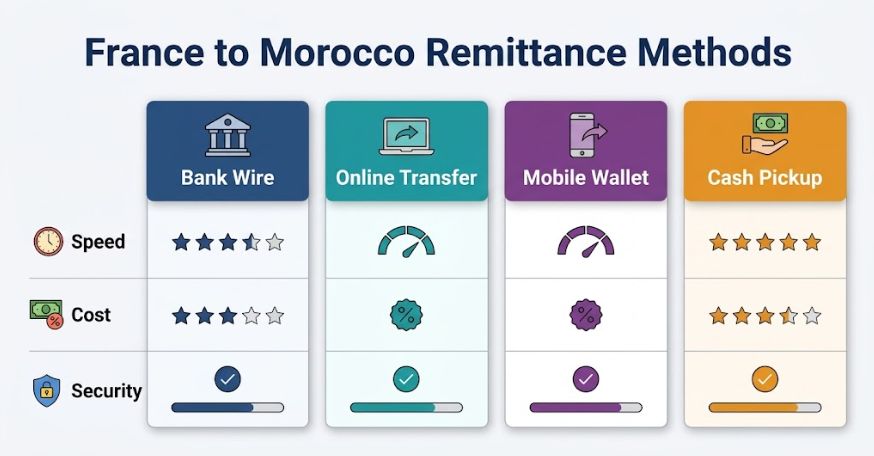
Bank deposit and the RIB
Bank deposit is the standard route for larger transfers. The recipient needs a Moroccan bank account and the RIB, the bank details used for transfers. The account name must match the recipient name on the transfer.
Ask the recipient for a recent RIB rather than copying an old one. Bank details can change, and a single wrong digit can delay the payment. If the recipient uses a joint account, confirm whose name should appear on the transfer.

Documents and the exchange rules
French senders usually need photo identification and proof of address. Larger transfers can trigger source of funds questions. The recipient may need identification and a bank account in their own name.
Moroccan exchange rules can require supporting documents for certain payments, especially larger or unusual transfers. Ask the provider what it needs before you fund the transfer so the payment is not held after it leaves France.

Timing around French and Moroccan holidays
Euro to dirham transfers often arrive the same day or the next business day. French bank hours, Moroccan bank hours and public holidays can add time. A transfer initiated on Friday afternoon may not settle until the next business week.
If the payment is for a family event or a property deadline, send it earlier than you think you need to. Ask the provider for an estimate that accounts for the destination bank, not just the send button.

The fee trap on larger transfers
A fixed fee is easy to see. A percentage margin is not. On a large transfer, the margin usually matters more than the fixed fee. Ask for both, then calculate the effective rate.
If you send regularly, compare the all-in cost over a few transfers, not just one. A provider that is slightly cheaper on a small amount may be more expensive on the amount you actually send each month.
What to check with each provider
Only providers that support both currencies in this corridor are listed. We do not publish provider fees here because they change by country, payment method and amount. Open a live quote and compare the amount that actually arrives. Provider order is not a ranking of cost.
| Provider | What to check | Link |
|---|---|---|
| Revolut | Check your plan limits, the corridor fee and whether the recipient can be paid in the local currency. | Open |
| Wise | Look at the fee and the rate margin separately, then confirm the payout method available in the destination country. | Open |
| OFX | Check the minimum transfer size, how you request a quote and whether the deal is handled online or by phone. | Open |
| WorldRemit | Confirm whether the destination supports bank deposit, mobile wallet or cash pickup, and who pays any receiving fee. | Open |
| Xe | Check the rate margin, the settlement time and whether the recipient needs a bank account or can collect cash. | Open |
| Remitly | Compare the standard rate and fee, not only a first transfer promotion, and confirm the expected arrival date. | Open |
Some links are affiliate links. If you open an account or start a transfer, we may earn a commission at no extra cost to you. How this site is funded.
How to send money to Morocco
- Start with the live mid-market rate and compare the total amount your recipient would receive.
- Confirm the payout method and the recipient account, wallet or pickup details.
- Complete the provider identity and source of funds checks before you fund the transfer.
- Check the quote expiry and whether the provider locks the rate when you pay.
- Keep the receipt and confirm the amount that arrives in Morocco.
Timing and document requirements vary by provider and payout method. Confirm them on the provider site before you send.
Frequently asked questions
How much is 1 EUR in Moroccan dirhams today?
At the latest update, 1 EUR is worth 10.8929 MAD at the mid-market rate. That means 100 EUR is about 1,089.29 MAD and 1,000 EUR is about 10,892.91 MAD before provider fees and margins.
Why is the Moroccan dirham managed?
Bank Al-Maghrib sets the dirham against a basket of currencies, with the euro and dollar carrying the most weight. The managed band limits large daily moves and supports trade and investment flows.
What is a RIB and does my recipient need one?
A RIB is the bank identity document used for Moroccan transfers. It contains the bank, branch and account details. A bank deposit usually requires the RIB and an account name that matches the recipient.
Can I send money to Morocco without a bank account?
Some providers offer cash pickup, but coverage is limited. Check the pickup location, the identification requirements and the collection fee before you send.
How long does a transfer from France to Morocco take?
Many transfers arrive the same day or the next business day. Bank hours, public holidays and additional checks can add time. Ask the provider for an estimate for your specific payout method.
Useful links
Related guides
CurrenciesLive is an informational tool. It does not process, hold or transfer funds. Rates are indicative mid-market values, not quotes from any provider.